Palace Music Yew Year`s Eve Concert: ZAHHARENKOVA & BEETHOVEN PIANO SONATAS IV
Sunday, December 27, 2026 at 6 p.m. Kadriorg Palace / Kadriorg Art Museum
PALACE MUSIC NEW YEAR`S EVE CONCERT
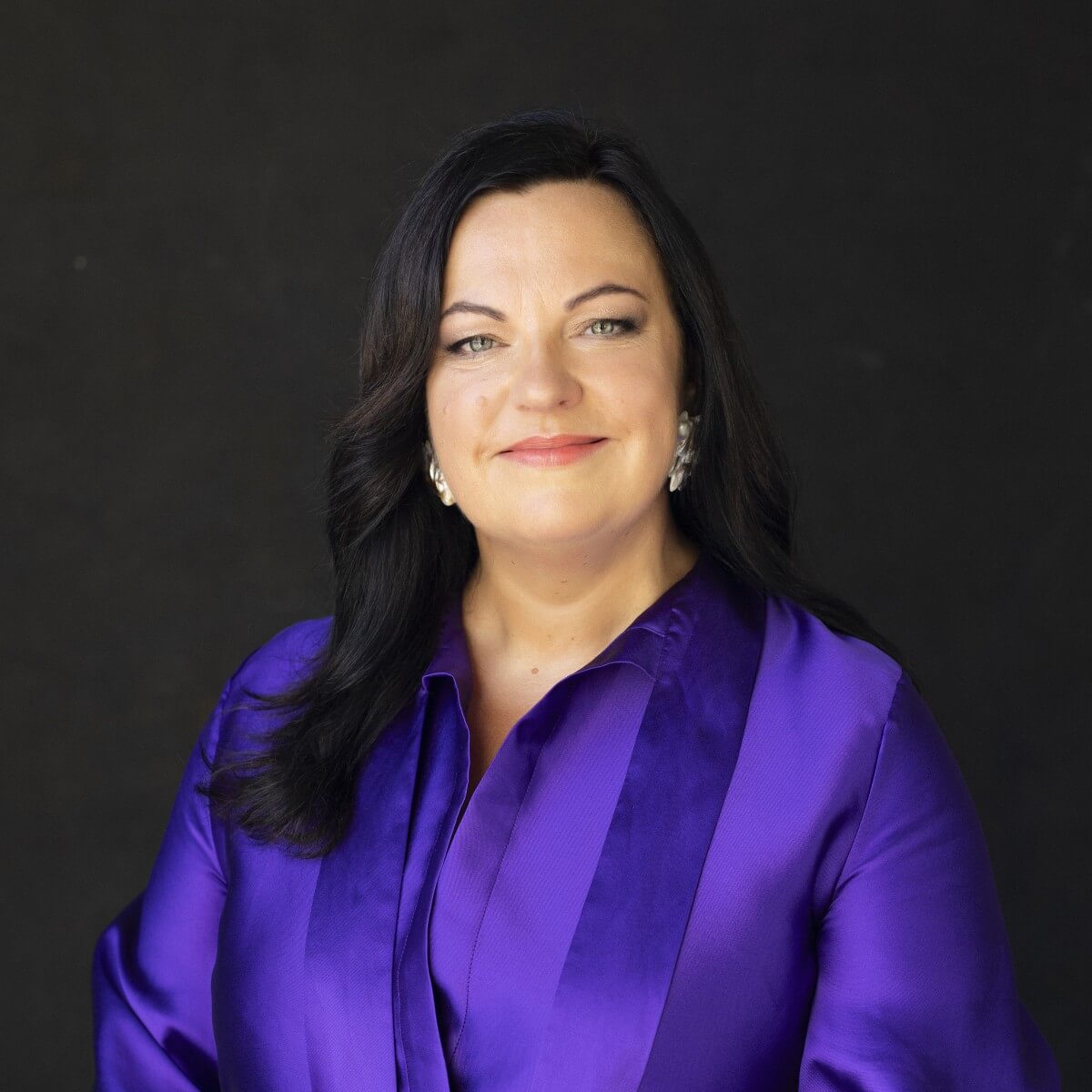
IRINA ZAHHARENKOVA - fortepiano
Program:
Ludwig van Beethoven (1770-1827)
Piano Sonata No. 14 in C sharp minor Op. 27 No. 2 "Moonlight"
Piano Sonata No. 9 in E major Op. 14 No. 1
Piano Sonata No. 10 in G major Op. 14 No. 2
Beethoven's Piano Sonatas in Full Cycle on the Fortepiano at Kadriorg Palace.
For the first time, the Estonian audience will experience the complete cycle of all Ludwig van Beethoven's piano sonatas performed on a period instrument – the fortepiano. One of Estonia's most acclaimed keyboard artists on the international stage, Irina Zahharenkova, will present the sonatas in the intimate and distinctive atmosphere of Kadriorg Palace, creating an exceptionally fitting frame for Beethoven's oeuvre.
The fortepiano was precisely the type of instrument whose capabilities Beethoven decisively exploited throughout his life, while its own development in turn influenced his musical language. The brighter tone and more responsive action of Viennese piano makers' instruments allowed the composer to expand the dynamic range, experiment with new textures, and craft unprecedented dramatic and poetic sound worlds. Listeners of the cycle will encounter these works in a sonic palette temporally and aesthetically far closer to Beethoven than that of the modern concert grand piano.
Over his lifetime, Beethoven composed 32 piano sonatas, often described as the composer's "autobiography." Alongside the early classical sonatas, his mature and late works feature revolutionary musical thinking, a boldness in shifting formal boundaries, and profound engagement with existential themes. The fortepiano illuminates this expansive creative journey with intimate discourse, phrasing akin to the human voice, and unexpected dynamic contrasts that often recede in the massive sonority of today's pianos.
The concerts will take place as a series in the main hall of Kadriorg Palace, allowing audiences to immerse themselves in Beethoven's world either through individual evenings or by following the dramaturgical development of the entire sonata cycle from beginning to end. The program includes audience favorites such as the "Pathétique," "Moonlight" and "Appassionata," alongside rarely performed early and late sonatas that gain fresh dimension in the fortepiano's sonic light.
The complete performance of Beethoven's sonatas on the fortepiano represents a significant event in both Estonian musical life and the international context. It consciously unites principles of historically informed interpretation, stylistically sensitive execution, the performer's free creative imagination, and a deep gaze into the oeuvre of one of Western music history's central composers. The concert series speaks to seasoned music lovers, performers, and students, as well as listeners seeking their first profound encounter with Beethoven's piano music.
Beethoven – The Radicalized Classicist.
Ludwig van Beethoven shattered the boundaries of music and paved the way for Romanticism. His oeuvre underwent a dramatic transformation amid an era when the French Revolution (1789 - 1799) shook Europe, ushering in the ideals of liberty, equality, and fraternity.
Beethoven's early works adhered to the Classical style of Haydn and Mozart. Evolutionary spirit inspired him toward rebellious self-expression. His Symphony No. 3 (1804) was originally dedicated to Napoleon as the embodiment of the Revolution but disillusioned by the idol's dictatorial ambitions. He later replaced it with the title "Eroica" ("Heroic"). Music born at turning points in Beethoven's life became a symbol of humanism and resistance.
The turbulent times coincided with the rapid evolution of the piano (fortepiano), transforming the delicate keyboard instrument into a powerful musical force. Instrument makers had to adapt swiftly to accommodate new musical ideas, enhancing sonority and expanding dynamic range. Beethoven's "violent" playing style - described by contemporaries and likely exacerbated by his progressing deafness - along with the forceful aesthetic of his compositions, propelled the piano to a monumental leap forward within mere decades, mirroring societal upheavals and innovations in musical expression.
Irina Zahharenkova’s long journey with Beethoven’s piano sonatas brings the complete cycle of all 32 works before the audience in the main hall of Kadriorg Palace, performed on a period instrument from Beethoven’s time – the fortepiano. The complete performance of the sonatas takes shape as a concert series that, on the one hand, forms an exceptionally compelling musical and historical document, and on the other, represents a pinnacle of interpretative art and a high point of artistic self-expression through the works of one of the greatest geniuses in music history.
Irina Zahharenkova is one of the most beloved and internationally successful Estonian pianists, whose performances are characterized by a strongly personal style, natural musicality, and masterful piano handling. Her delicate and stark passion elevates everything she performs. Her performances at a high artistic level possess a transcendental dimension and wholeness. When Irina sits down at the piano, the music flows effortlessly and naturally from her fingers, captivating listeners completely.
She has won top prizes at several international competitions: the Johann Sebastian Bach Competition in Leipzig (2006), the A. Casagrande Competition in Italy (2006), the George Enescu Competition in Romania (2005), and others. In Estonia, she drew significant attention at the VI Estonian Pianists' Competition (2002), where she received a diploma, the ERSO prize, and the audience's fervent support.
Irina Zahharenkova studied piano at the Estonian Academy of Music and Theatre under Prof. Lilian Semper and at the Sibelius Academy under Prof. Hui-Ying Liu Tawaststjerna. Zahharenkova has recorded Bach's Goldberg Variations and an album of Scarlatti sonatas for the Moscow label Classical Records, as well as many other works for piano.
Tanel Joamets in the journal Muusika:
"Zahharenkova is, as is well known, the Estonian interpreter who has won the most prestigious international competitions. To break through at these global top contests, technical perfection, virtuosity, super-fast repertoire learning, and a reliable memory are not enough; inevitably, the artist's personality and their unique interpretation are also essential—something that must strongly touch or shake the listener; sometimes, why not, even through irritation, but in any case, it must not leave one indifferent. One could say that Zahharenkova has achieved so much in her career that she no longer needs to worry about what people think of her or her interpretations; instead, she can focus with direct passion on her most authentic perception, which has always left me with a very sincere impression and experience. And of course, it must be acknowledged that her interpretations sometimes deviate quite impressively from the so-called average established norm. With her Bach interpretations, she is—for me—one of the four most touching pianists alongside Glenn Gould, Dinu Lipatti, and Angela Hewitt; everything I've heard from her in Bach could be called the best in its own key. In the sense that it is the best for such an artistic approach. It shows that one can approach it completely differently, naturally, and reach the absolute top via another path. When comparing Zahharenkova, Hewitt, Gould, or Lipatti, I cannot say that one is better than the other, but rather that each is the best in their own direction and emphasis; and just to clarify, I am of course writing here only about my personal favorites and make no claim to objective or absolute truth with my 'chart.' What makes Irina's Bach distinctive is that she uses pedal unusually extensively for Baroque music, evocatively conjuring—positively—almost mystical sound worlds; her hands are often deliberately slightly apart, which adds a fittingly gentle 'relaxed' nuance to the spirituality of Bach's music at times. One could say she performs Bach as impressionistic music. Indeed, everything can be found in Bach's music, and Bach can be opened in any key without losing its universality or core message. I've even heard very fine suggestive performances of Bach's piano music from jazz singers, where each singer is entrusted with their own polyphonic voice. In short, listening to Irina's Bach has always given me a highly successful and immersive experience."
The artistic director of the Palace Music Concert Series is Aare Tammesalu.
In cooperation of the Art Museum of Estonia.
Tickets are on sale at the Kadriorg Art Museum and Piletikeskus outlets.
Supporters: Estonian Ministry of Culture, The Cultural Endowment of Estonia, Estonian Public Broadcasting, Tallinn Culture and Sports Department, UNESCO City of Music Tallinn, Kultuurikõla, Pointprint
Special thanks: Visit Estonia, Visit Tallinn, Õhtuleht
Concert tickets are not refundable, but if necessary, we can exchange them for passes to other Palace Music concerts
Schedule